BertinBioreagent KitsShopAcylated Ghrelin (human) Express ELISA kit
Original price was: £571.30.£514.20Current price is: £514.20. EX VAT
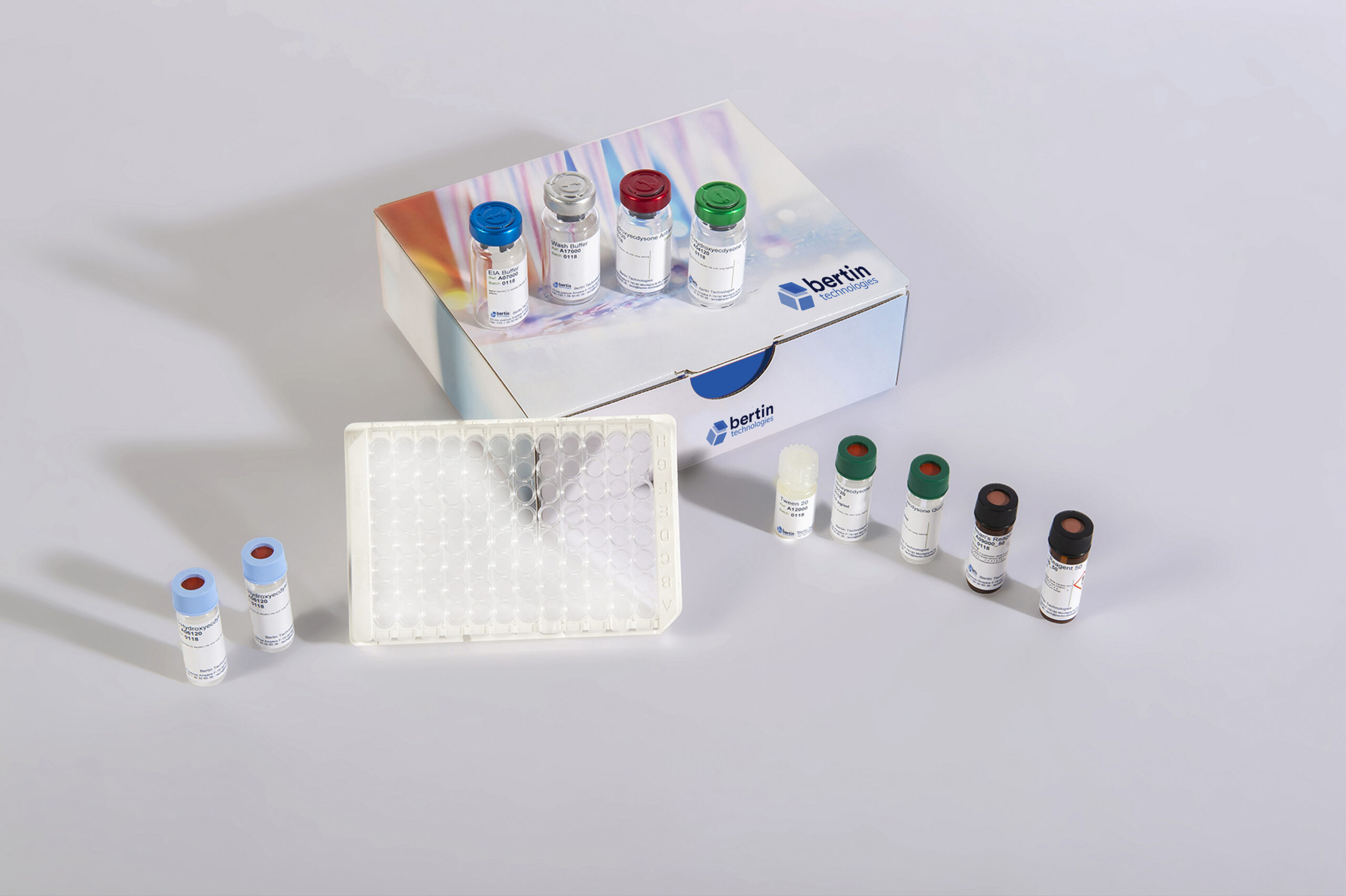
Acylated Ghrelin (human) Express ELISA kit
Description
Enzyme ImmunoAssay (EIA) is a technique used to detect and quantify antigens (such as proteins or hormones) or antibodies in biological samples. It is based on the specific binding between an antibody and its antigen. In EIAs, either the antibody or the antigen is labelled with an enzyme. When the appropriate substrate is added, the enzyme converts it into a measurable product, producing either a colour change or fluorescence.
Enzyme‑Linked Immunosorbent Assay (ELISA) is a specific type of EIA that uses a solid phase—typically a microtiter plate—coated with an antigen to immobilize the molecule of interest. Over time, the term ELISA has been extended to include EIAs in which the solid phase is coated with an antibody rather than an antigen. For this reason, Bertin Bioreagent’s EIA kits that use coated antibodies are also commonly referred to as ELISA kits.
Bertin Bioreagent specialises in developing analytical tools for biomarker detection. In 2004, under the SPI‑Bio brand, the company launched its first ghrelin biomarker assay kits, the result of advanced research and development efforts. Bertin Bioreagent was the first company to provide highly sensitive bioanalytical tools capable of measuring both acylated and non‑acylated ghrelin.
Ghrelin, discovered in 1999, is rapidly becoming one of the most significant endocrinology targets of the 21st century. Initially identified in rat stomach as the endogenous ligand for the growth hormone secretagogue receptor (GHS‑R), ghrelin is primarily produced in the stomach but is also expressed in several other organs. Beyond its growth hormone‑releasing and appetite‑stimulating effects, ghrelin has been implicated in gastric motility (similar to motilin), gastric acid secretion, cardiovascular regulation, antiproliferative activity, pancreatic function, glucose metabolism, and sleep regulation.
The ghrelin gene encodes a 117‑amino‑acid precursor, prepro‑ghrelin. This precursor is processed into the 28‑amino‑acid ghrelin peptide (in humans). Before secretion, ghrelin undergoes octanoylation at serine 3—an essential modification for its biological activity.
Although endogenous ghrelin is closely linked to feeding behaviour, its potential therapeutic relevance extends far beyond appetite regulation. Ghrelin may play roles in conditions such as osteoporosis, somatopause, infertility and ovulation induction, and certain cardiovascular diseases.
For pack quantities >10 please contact us for a quote
Specification
| Detection Limit | |
|---|---|
| Shipping | |
| Size | |
| Standard Curve Range | |
| Tracer | |
| Unit of Measure |
Related products
-

ShopBiotechTubingPEEK Tubing 1/16″ OD x 0.010″ ID x 1000 Feet, Natural